Not only does this entail a large cost for society and employers, but the absence can also contribute to an increased burden on those employees who are at work. The consequences of this can be increased stress, reduced productivity and a poorer working environment. The importance of understanding what affects sick leave in your company is important in order to understand what measures should be taken to deal with this in an effective and good way.
Mapping and preventive work
Working with sick leave should be a central part of HR work in every company. It is mandatory to keep statistics on absence, and it is recommended that sick leave be mapped to identify causes and compare with both the industry and the rest of the country. When you understand sick leave in your company, you will be in a stronger position when it comes to preventing and working with it.
Broad support in management with well-trained managers, good and well-known routines and a good working environment are prerequisites for carrying out preventive work. Workplace adaptation is one of the most effective measures to stay ahead of sickness absence. These measures are often divided into organizational measures, psychosocial measures and physical measures. With organizational measures, means, for example, good organization of work tasks, clear routines and good support from management. With psychosocial measures means, for example, well-being, support for employees to reduce stress and conflicts, etc. By physical measures This means, for example, ergonomic adaptation and prevention of strain. To be successful, sufficient resources must be allocated to prevention.
Preventive measures can play an important role in reducing sick leave in a workplace. The Working Environment Act requires employers to actively work to facilitate a good working environment, which can prevent both physical and mental strain on employees. A good working environment not only prevents sick leave, but also helps create a culture where employees feel valued and cared for.
An important aspect of prevention is identifying early signs of health problems in employees and taking action. before absence occurs. For example, flexible working arrangements, such as the option of working from home or reduced working hours during periods of increased workload, can help reduce sickness absence. Employers should also prioritize reducing stress and promoting well-being, for example through good HSE routines, performance reviews and regular evaluation of workload.
The importance of early follow-up and work participation
Research shows that the earlier the follow-up starts, the better the chances of a successful return to the workplace for the person on sick leave. It is therefore important to be early in finding good short-term and long-term solutions together with the person on sick leave. It is particularly important to ensure good dialogue between the employer and the person on sick leave. Staying in work has also been shown in the vast majority of cases to be health-promoting. Statistics show that 14 percent of those on sick leave for more than 13 weeks are still outside the workforce after one year. Long-term absence therefore has a clear tendency to lead to exclusion from the workforce.
Before the IA agreement became applicable to all companies, sick leave was largely seen as a private matter and contact between the employer and the person on sick leave was often very limited. In recent years, this has changed considerably. Sick leave is now considered a shared responsibility between the employer and the employee. The employee is responsible for reporting the absence as early as possible, and for cooperating on arrangements with the aim of returning to work as quickly as possible. The employer is obliged to follow up on the person on sick leave and prepare a follow-up plan, as well as implement arrangements so that the employee can perform adapted tasks during the sick leave.
Everyone in the organization, from managers to employees and support staff, needs to know their roles in the sick leave process. It is also important that employees who are in the early stages of sick leave feel cared for and receive the support they need to return to work.
Sick leave work requires expertise
Following up on sick leave requires employers to have both the expertise and resources to handle the different situations that may arise. Managerial support is an important component of sick leave work, and it is crucial that managers have sufficient knowledge of the duties and rights of both themselves and the employee.
Managers must also be able to adapt to the individual employee, especially in cases where health challenges are complex. This requires a flexible and agile approach where the manager considers what is the best solution for both the sick person and the company.
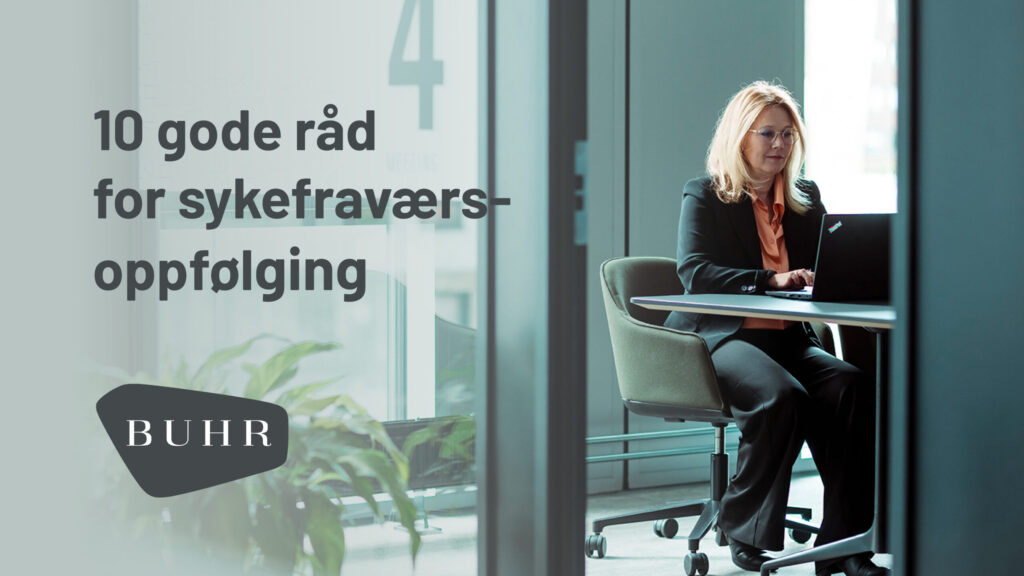
10 good tips for sick leave follow-up
- Map sickness absence to identify causes and patterns.
- Anchor Work with management with clear routines and training.
- Facilitate the work environment with organizational, psychosocial and physical measures.
- Start early follow-up of sick leave to promote return.
- Facilities part-time work for those on sick leave with good arrangements.
- Create good dialogues between the employer and the sick leaver.
- Establish clear frameworks and procedures for follow-up of sick leave.
- Identify early signs on health problems and take action quickly.
- Promoting well-being with flexible working arrangements and stress reduction.
Give leaders necessary expertise to manage sick leave effectively.